TimeCue – Reminders & Alerts
- 0.0
- Rating
- 10.00K
- Installs
- Free
- Price

 Analysis by App-foxy
I approached TimeCue as a small productivity app for one practical problem: remembering the right moment instead of merely writing down another task. Its short store description is simply “TimeCue,” while the broader promise is about seizing the day and noticing the moment. That makes it sound less like a full project-management system and more like a focused companion for time-sensitive reminders and alerts.
That distinction matters. I do not see this as a replacement for a calendar, a team task board, or a detailed notes system. I see it as something you open when the main question is, “When do I need to be reminded?” If that is also how you organize your day, this app is worth considering. If you need complex planning, collaboration, or a long history of completed work, a more established category of tool may suit you better.
What I looked for before recommending it
My first test with a reminder app is not whether it looks busy or offers a long list of options. I want to know whether I can create a useful alert quickly, understand what it is for later, and trust myself to notice it at the right time. TimeCue’s appeal is tied to that focused purpose. It belongs in the productivity space, but its value depends on how well it supports moments rather than broad project planning.
You May Also Like

 Blood Strike: 2.5 Anniversary
Blood Strike’s Loadouts Turn Every Drop Into a Tactical Gamble
A close look at Blood Strike’s custom loadouts: how fast access to signature weapons reshapes its battle royale rhythm, rewards preparation, and narrows the gap between fights.

 Pandora - Music & Podcasts
Pandora’s Music Is Easy to Start, but Harder to Recover
Pandora’s strength is its low-effort path from a seed to a station. Its weak spot is how much confidence it asks you to place in connection, setup, and quiet recovery.

 8 Ball Pool
 Is Built on Rivalries, Rematches, and Routine
A close look at the rivalries, rematches, shared routines, and unanswered safety questions that turn a quick pool match into a persistent mobile community.

 Samsung Music
’s Quiet Strength Is Playing What You Already Own
Its reach comes less from spectacle than from dependable access to a personal library. That simplicity is both the app’s strongest retention engine and its ceiling.

 AccuWeather: Weather Radar
AccuWeather Review: A Quick, Clear Forecast for Everyday Decisions
For everyday plans, the best forecast is the one you can understand quickly. AccuWeather makes rain timing, radar, and local conditions easy to act on, with a few trade-offs.

 Hill Climb Racing
Why Hill Climb Racing Still Turns Crashes Into One More Run
A tiny car, a bumpy hill and one more upgrade: Hill Climb Racing keeps resurfacing because its simple chaos makes every near-miss feel personal.
More From Our News Desk
View All News


I also considered how it would fit beside tools people already use. Most phones include basic alarms, calendar notifications, and to-do lists. Those options are convenient because they are already installed, so a separate app needs to make the reminder experience feel clearer or more intentional. TimeCue has a chance to win when a standard alarm feels too blunt and a calendar entry feels too formal.
Another decision point is the kind of memory you are trying to create. A morning alarm tells you to wake up. A calendar event tells you that something occupies a particular part of your schedule. A task list tells you what remains unfinished. A moment-focused reminder sits between those ideas: it can help you remember a small action at the point when remembering it is useful. That is the niche I would use to judge this app.
There is also the question of commitment. Any reminder system can become noisy if I create alerts for every minor thought. My practical advice is to reserve TimeCue for actions that have a meaningful timing trigger: calling someone after work, checking an oven, taking something out of the freezer, beginning a short study session, or remembering a personal routine that is easy to overlook. The app becomes more valuable when each alert has a clear reason to exist.
A focused place for time-sensitive actions
In everyday use, I would treat TimeCue as a layer between memory and scheduling. Imagine finishing lunch and realizing that you need to send a message once you arrive home. A note can be forgotten, while a general task can disappear among other items. A dedicated alert gives that intention a better chance of reaching me at the useful moment.
This is especially helpful for people who think in short intervals rather than large plans. Students may want a prompt to switch from reading to practice. Someone working from home may need a nudge to stand up, start a call, or stop an activity before the next commitment. A parent may use a reminder for a small household transition that does not deserve a full calendar event. These are modest examples, but they are exactly where a lightweight tool can earn a place.
One non-obvious advantage of this approach is that it can reduce the mental cost of holding a future action in mind. Instead of repeatedly checking the clock, I can decide once, create the cue, and return to the current task. That does not make the work itself easier, but it can make the day feel less fragmented. The best use is not adding more alerts; it is moving a few important thoughts out of my head.
How I would build a reliable routine around it
I would begin with a small experiment rather than transferring every reminder from another app. For a few days, I would create only alerts tied to actions that are easy to miss. After each one, I would ask whether the wording made the intended action obvious. “Call the dentist” is more useful than “dentist,” because the first phrase tells me what to do when the notification appears.
A second useful habit is separating reminders by consequence. If missing an alert creates a real problem, it deserves clearer wording and a deliberate time. If missing it has no consequence, it may not need to be created at all. This simple filter prevents the app from becoming a stream of interruptions. It also helps reveal whether TimeCue is solving a genuine memory problem or merely encouraging more notification checking.
I would also avoid using a reminder as a substitute for a complete plan. For example, an alert saying “work on presentation” may arrive at the correct time but still leave me unsure where to begin. A better workflow is to keep the project details in a notes or task app and use TimeCue only for the starting moment. That division of labor lets each tool do one job instead of forcing a small reminder app to carry an entire project.
For recurring routines, I would be careful about creating a pattern that no longer reflects real life. A reminder that was useful during a busy week can become background noise later. My recommendation is to review active alerts occasionally and remove anything I now remember naturally. This is a small maintenance step, but it is one of the most important differences between a helpful reminder system and an irritating one.
Where TimeCue has the strongest case
The strongest case is simplicity of purpose. The app is free, carries an Everyone content rating, and is published by Classified Prime LLc. It has reached over ten thousand installs, which gives it a modest but real user footprint without making me treat popularity as proof of quality. For someone who wants to try a focused productivity tool without adding a purchase decision, that low barrier is useful.
It is also approachable for people who do not want to learn a large productivity system. Many planning apps ask users to understand projects, labels, priorities, views, or workflows before they feel comfortable. TimeCue’s identity suggests a more direct relationship with time: decide what should be remembered, choose the moment, and let the alert support the action. That can be a better starting point for someone who has abandoned complicated task managers.
I can also see value for users who already have a calendar but do not want to place every tiny action inside it. Calendars are excellent for appointments and commitments, yet they can become cluttered when filled with brief personal prompts. A dedicated reminder tool can preserve the calendar for events while handling the smaller cues that help a day run smoothly.
Another strength is psychological rather than technical. A time cue can mark a transition, not just a deadline. “Start winding down,” “prepare for the call,” or “leave now” are different from “finish the project.” They help me act before a deadline becomes urgent. Used this way, the app supports pacing and preparation, which is an underappreciated part of personal productivity.
Where the usual alternatives may be better
I would choose a calendar first when the reminder belongs to an appointment, involves other people, or needs a visible place in a larger schedule. A calendar makes conflicts easier to spot and gives an event more context. If I need travel time, an invitation, or a record of where something happens, I would not rely on a narrowly focused reminder alone.
I would choose a task manager when the action has several steps, a deadline that can move, or a need for priorities and completion tracking. A reminder can tell me when to begin, but it is not automatically a substitute for breaking work into pieces. For a research assignment, a home renovation, or a multi-stage work project, a structured task system is the more sensible home.
I would choose the phone’s built-in alarm for repeated wake-up or routine signals where reliability and familiarity matter more than descriptive context. An alarm is often the better tool when I need a strong, unmistakable interruption. TimeCue makes more sense when the alert belongs to a particular action and should be understood in context when it appears.
Notes remain better for information that must be read rather than acted on at a specific time. A shopping list, meeting ideas, or a collection of reference details should not be forced into reminder wording. The practical comparison is not “which app is best?” but “what kind of memory am I outsourcing?” TimeCue is most convincing when the answer is a moment-triggered action.
Everyday scenario: protecting a transition
Here is the situation where I would recommend trying it. I finish work at home but often continue browsing or answering small messages, then realize too late that I needed to prepare dinner or leave for an evening commitment. I could put the event in my calendar, but the problem is not knowing that it exists. The problem is beginning the transition early enough.
I would create a cue with an action-oriented label such as “wrap up and get ready.” When it appears, the goal is not to complete a large task; it is to interrupt the current mode of attention. I would then keep any detailed checklist elsewhere if needed. This makes the alert meaningful without turning it into a miniature project plan.
The same pattern works for studying. Instead of placing every study activity into a calendar, I could use a cue to start a focused block, then keep the actual reading list or assignment details in the appropriate tool. The reminder handles the start; the other tool handles the content. That separation is a concrete workflow advantage over trying to make one app manage every part of the day.
The friction I would not ignore
A focused reminder app still depends on my discipline. If I create too many alerts, the tool can train me to dismiss notifications rather than act on them. That is not a flaw unique to TimeCue, but it is a real limitation of the category. The app can place a cue in front of me; it cannot decide whether that cue deserves my attention or prevent me from postponing everything.
There is also a trade-off between speed and context. A small app may feel easier than a full planner, but the simplicity that makes it approachable can be limiting when I want notes, dependencies, shared responsibility, or a detailed record. I would not adopt it as my only productivity system unless my needs were genuinely narrow.
Users should also think about how they respond to alerts. Some people benefit from frequent prompts, while others find notifications stressful and prefer a quiet written plan. If alerts make me feel managed rather than supported, I would reduce the number of cues or use a calendar and paper routine instead. A productivity app is successful only when it improves follow-through without adding unnecessary pressure.
The technical baseline is broad: the current version is 1.00.5 and it runs on Android 8.0 or later. That makes it accessible to many Android users, but I would still check the app’s behavior on my own phone before depending on it for something critical. For an important appointment or safety-related instruction, I would use a second dependable method as well. A reminder should support responsibility, not carry the entire risk of forgetting alone.
What switching actually involves
Moving from a built-in alarm to TimeCue should be easy if I only have a few personal prompts. The real cost is not entering reminders; it is deciding which existing alerts deserve to remain. I would avoid copying everything automatically. Instead, I would review my current alarms and calendar notifications, remove duplicates, and give each remaining cue one clear purpose.
Switching from a task manager is more involved because the two tools organize time differently. I would keep projects, checklists, and deadlines where they already make sense, then add TimeCue only for moments that are repeatedly missed. This prevents the common mistake of maintaining the same reminder in multiple places, which creates duplicate notifications and uncertainty about which one to edit.
A useful transition test is to choose one routine with a visible outcome. For example, I might use the app for beginning a study session or preparing to leave. After several days, I would judge whether the cue changed my behavior. If I still dismiss it automatically, the problem may be the wording, the timing, or the fact that the action does not matter enough to deserve an alert.
I would also keep labels consistent. Starting with a verb makes the notification easier to scan, while adding a location or person can distinguish similar actions. This is a small but practical improvement: the reminder should answer “what now?” without requiring me to reconstruct the original thought.
Who should install it, and who should skip it
I would recommend TimeCue to someone who regularly says, “I knew I had to do that, but I forgot when.” It is a sensible fit for personal routines, short preparation windows, household transitions, study starts, and other actions where timing matters more than project structure. It is also a low-risk experiment for Android users who want a free productivity app with an Everyone rating and a narrow, understandable purpose.
I would be more cautious for anyone seeking a complete planner, shared family organizer, work collaboration tool, or detailed habit system. Those needs call for broader capabilities and more visible structure. I would also skip it if I already have a reliable reminder workflow that I rarely miss. Adding another app just because it is free can create more maintenance than value.
People who dislike notifications should not assume that a dedicated reminder app will solve that discomfort. The better answer may be a paper schedule, a single daily planning session, or fewer but more meaningful calendar alerts. TimeCue is for people who want timely prompts, not for people trying to eliminate prompts from their day.
My recommendation after weighing the trade-offs
My view is favorable, but deliberately specific: TimeCue is worth trying as a focused layer for moment-based reminders, not as a universal replacement for every productivity tool. Its free availability removes the biggest barrier to testing it, and its straightforward identity makes sense for users who want to turn a future intention into a timely cue.
I would install it, start with a handful of high-value reminders, and keep my calendar, notes, or task manager for the information those tools handle better. After a short trial, I would keep it only if the alerts help me begin or remember actions that I was genuinely missing. That is the right standard, rather than the number of reminders I can create.
My bottom line: use TimeCue when the moment is the problem. It is a promising choice for small, personal time prompts and a poor fit for complex planning. If you give each alert a clear action, protect yourself from notification overload, and let other tools manage larger projects, the app can become a useful quiet nudge in the background of an ordinary day.
FAQs for TimeCue – Reminders & Alerts
01What is TimeCue – Reminders & Alerts used for?
TimeCue – Reminders & Alerts is designed to help you remember important tasks, appointments, habits, and time-sensitive activities. After reviewing the app, its main appeal is its straightforward reminder setup: you can create an alert, choose when it should appear, and use it as a personal prompt throughout the day. It may be useful for medication schedules, meetings, study sessions, household chores, or recurring routines.
02Is TimeCue – Reminders & Alerts easy to set up and use?
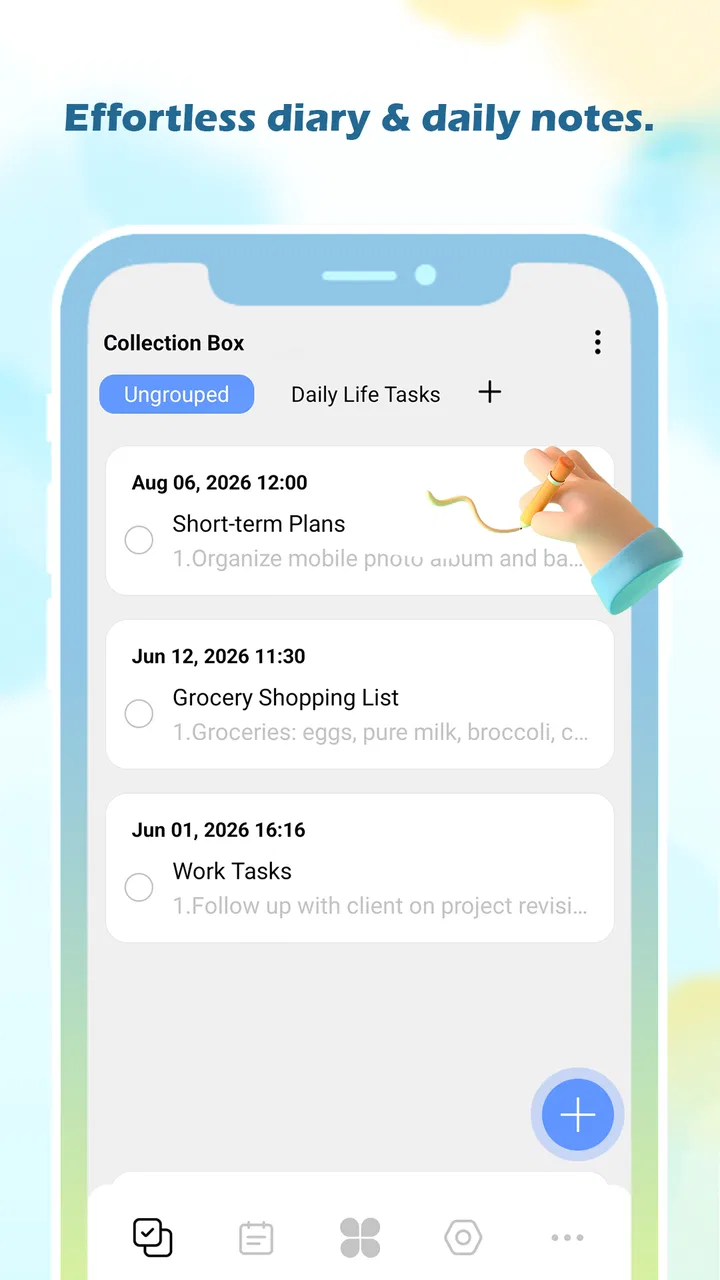
Yes, the app is generally aimed at users who want a simple reminder experience rather than a complicated productivity system. Creating an alert usually involves entering a title, selecting a date or time, and configuring repetition when necessary. The interface is focused on the essential controls, so new users should be able to understand the basic workflow quickly, although the exact options may vary depending on the device and app version.
03Can TimeCue create recurring reminders and alerts?
TimeCue – Reminders & Alerts is intended for both one-time and repeated notifications, making it suitable for routines that happen daily, weekly, or on another regular schedule. This can be helpful for recurring appointments, medication reminders, bill payments, exercise, or study plans. Before downloading, check the current store description because supported repetition patterns and advanced scheduling options can change with future updates.
04Will TimeCue reminders still work when the app is closed?
Reminders are generally expected to appear through the device’s notification system even when the app is not open. However, reliable alerts depend on permissions and operating-system settings. You may need to allow notifications, enable alarms or background activity, and exclude the app from battery-saving restrictions. If alerts are important, review these settings after installation and test a reminder before relying on it for critical events.
05Is TimeCue – Reminders & Alerts free, and does it require internet access?
The availability of free features, advertising, subscriptions, or optional in-app purchases depends on the version offered in the Android or iOS store. Basic reminder functions may work without a constant internet connection, but some features could require connectivity for synchronization, updates, or account-related services. Review the store listing and privacy information before downloading so you understand any costs, permissions, and data requirements.
Pros
- Flexible recurring reminders for routines
- tasks
- and important dates.
- Clean interface makes creating and reviewing alerts quick.
- Useful notification-based prompts without requiring a full calendar setup.
- Can help organize personal habits
- appointments
- and one-off tasks.
- Lightweight design is suitable for users who want a focused reminder tool.
Cons
- Advanced planning features may be limited compared with full calendar apps.
- Too many active alerts can make notifications feel overwhelming.
- Some useful options may require exploring the app’s settings first.
- Reminder management may become cumbersome with a large task list.
- Reliability can depend on notification and battery-saving permissions.

TimeCue – Reminders & Alerts
Gallery